
Skip to content
Brilliant Blue Biosciences logoBrilliant BlueBiosciences
Toxicity

Toxicity — what it means and how to control it

Cytotoxicity is the tax you pay for delivery. Some of it is unavoidable membrane stress; most of it is controllable, and it is usually the reason an experiment produces beautiful data that nobody can repeat at day five.

Acceptable window

≥80% viability

Relative to untreated control at 24–48 h post-transfection

Reagent-only control

Mandatory

Separates carrier toxicity from cargo and expression-related stress

Repeated dosing

≤2 rounds

Successive transfections compound stress and inflate apparent resistance

Where the damage comes from

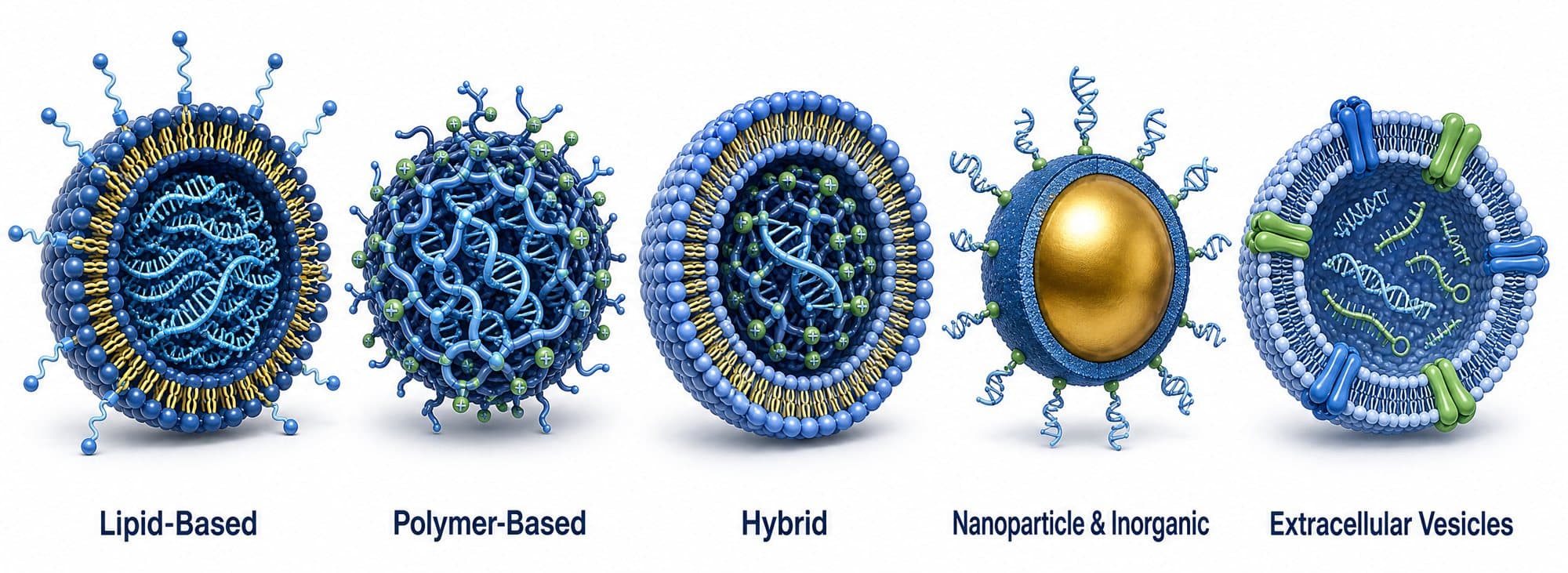
Excess positive charge is the dominant cause. Uncomplexed cationic lipid or polymer binds anionic membrane phospholipids, permeabilises the bilayer and triggers a rapid loss of membrane integrity. Toxicity therefore scales with free reagent, not with delivered cargo — which is why the highest-efficiency condition and the most toxic condition are often neighbours on the same matrix.

Endosomal overload is the second source. When large volumes of undegradable material accumulate, lysosomal membranes are destabilised and cathepsins leak into the cytosol, initiating apoptosis. Biodegradable polymer backbones and ester-linked lipids reduce this by design.

Expression stress matters too. Over-expressing a strong reporter such as EGFP for several days can itself inhibit growth; a reporter that is convenient on day one may be the confounder on day four.
Measuring toxicity honestly

Run viability assays alongside the delivery readout in the same plate, not in a separate experiment. Metabolic assays (ATP or resazurin) measure live-cell metabolism, dye-exclusion assays measure membrane integrity, and both can disagree — report at least one metabolic and one morphological readout.

For stable-line work, the relevant endpoint is not day-one viability but cumulative growth over 7–14 days, including the selection window. A reagent with 85% viability at 24 h can still fail if the surviving cells never recover their doubling time.

  • ATP-based luminescence (CellTiter-Glo) or resazurin (AlamarBlue) for metabolic viability.
  • Trypan blue or PI exclusion for membrane integrity and absolute counts.
  • Confluence imaging or Incucyte-style kinetic monitoring to catch delayed death that a single endpoint misses.
  • A reagent-only well in every experiment — the fastest way to separate carrier toxicity from cargo effects.

Mitigation playbook

Reduce the free-reagent fraction first: lower the reagent volume, shorten exposure, or switch to a formulation with higher cargo-per-particle efficiency. Where the biology allows, choose a cytoplasmic format — mRNA or RNP — so the protocol does not depend on nuclear delivery and can run at lower dose.

Medium exchange after 4–6 h instead of overnight exposure is the single highest-yield change for sensitive cells. Pre-conditioning with a lower confluency, pre-warming media to 37 °C and avoiding antibiotics during complexation reduce background stress so the treatment effect is easier to read.

SymptomLikely driverFirst action
Detachment within 4 hFree cationic reagentHalve reagent volume; switch to serum-containing overlay
Delayed death at 48–72 hEndosomal overload or cargo expressionUse biodegradable carrier; shorten or weaken expression
Vacuolated cytoplasmLysosomal swellingLower dose; increase wash steps after exposure
Reduced proliferation onlyExpression burdenAdd a no-insert vector control to separate effects

When toxicity goes wrong

Cells detach during the exposure window

Likely cause

Free cationic charge plus serum-free medium for too long

What to do

Shorten to 4 h, add 2–5% serum during exposure, pre-warm all solutions

Viability fine at 24 h, collapses by day 5

Likely cause

Endosomal/lysosomal overload and delayed apoptosis

What to do

Lower dose, use biodegradable carrier chemistry, verify with a kinetic assay

Toxicity only in one well of the plate

Likely cause

Edge effects, uneven reagent addition or evaporation

What to do

Add drop-wise across the well, rock gently, and never use the outermost wells; include a filler ring

Operating rules for Toxicity

  • Always run a reagent-only control — it tells you what the carrier alone costs.
  • For sensitive cells, dose in two steps: viability determines the ceiling, efficiency fills it.
  • Re-check tolerance after switching serum lot or thawing a new reagent vial.
Section 2 of 3Back to the guide