
Nucleic Acid Binding, Loading & Release
Gel Retardation (Agarose Gel Electrophoresis) Assay
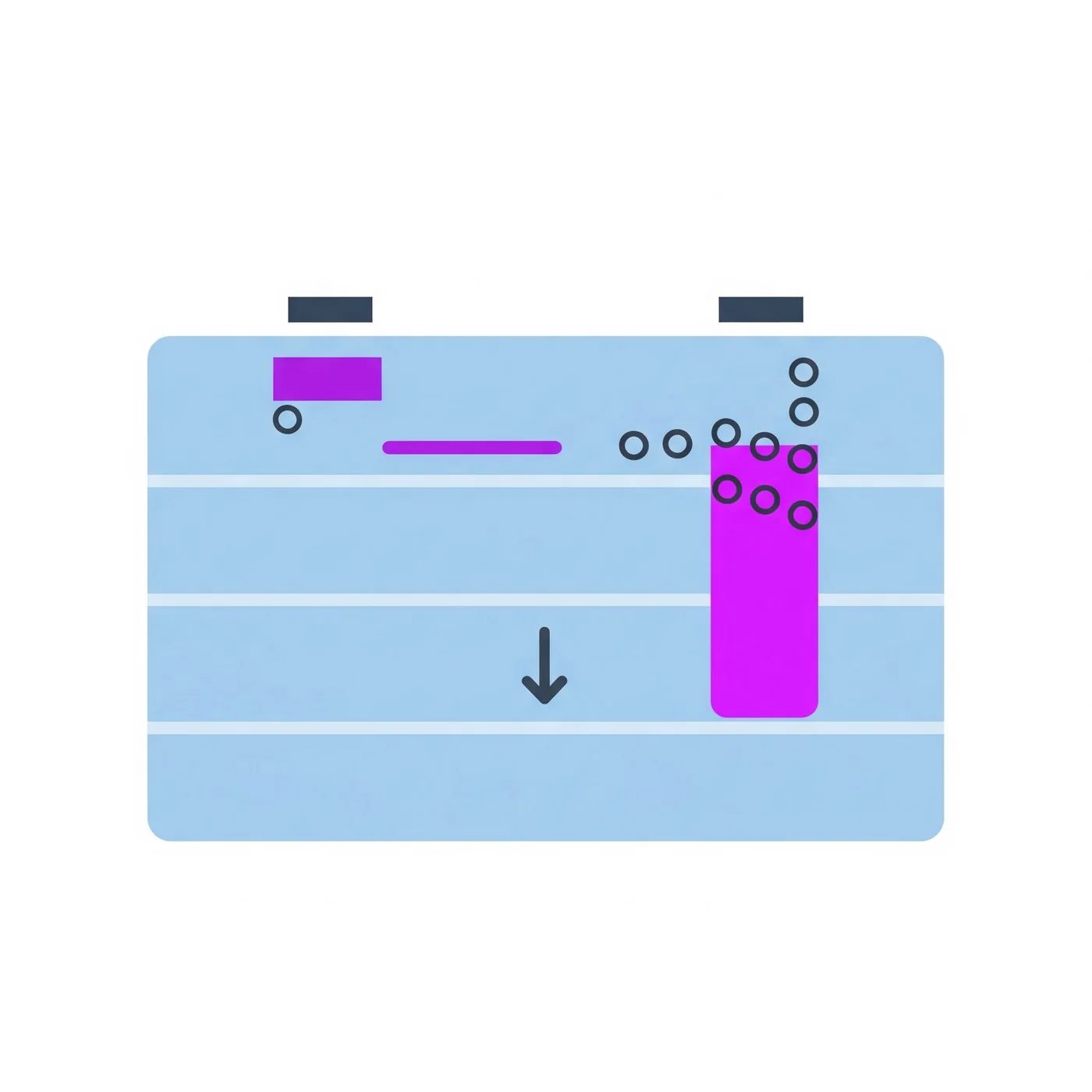
Nucleic acid binding by cationic carriers and the optimal N/P ratio.
Purpose
To evaluate nucleic acid binding and complexation efficiency of cationic carriers (e.g., liposomes, polymers). Determines the optimal N/P or +/− charge ratio.
Principle
Free nucleic acids migrate through agarose gel under an electric field; when bound to cationic carriers, they are immobilised and do not migrate.
Standard protocol
- 1
Prepare gel
- Make a 0.8–1% agarose gel in TAE buffer + 0.5 μg/mL EtBr.
- 2
Prepare complexes
- Prepare transfection complexes at increasing N/P or +/− ratios (e.g., 0.5:1 to 8:1).
- Incubate 20–30 min at RT.
- 3
Load and run
- Mix each complex with loading dye (no heat!).
- Load 10–20 μL per well.
- Run at 80–100 V for 30–45 min.
- 4
Imaging
- Visualise under UV light.
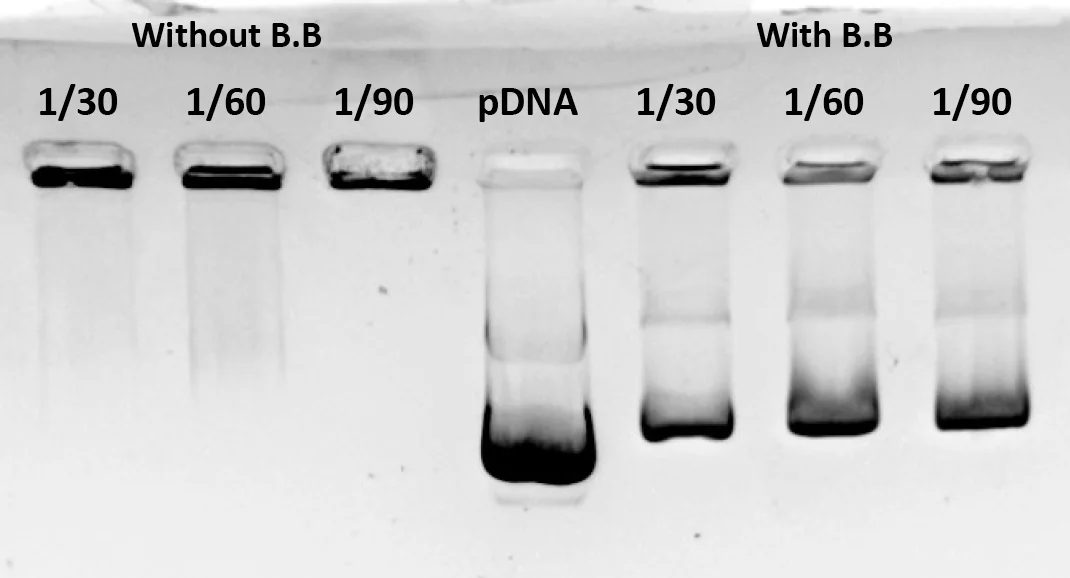
- Free DNA/siRNA: bright band.
- Complete retardation: no band (all nucleic acid bound).
- 5
Determine optimal ratio
- The lowest ratio with no visible band = complete binding.
Representative data
Let's engineer the next delivery breakthrough together
We co-develop nanocarrier and biosensing programs with pharma, biotech and academic groups — from target selection through GMP supply.